Skip to main content Skip to footer

Designing offices that support focus and privacy

Acoustic Office Partitions for Quieter Modern Workspaces

Noise is one of the most common frustrations in modern workplaces. Open plan layouts, video calls and hybrid working patterns mean conversations travel further than ever, making it harder for teams to concentrate or hold private discussions. Acoustic office partitions help control sound between spaces, improving speech privacy, meeting quality and overall workplace comfort.

Noise has become one of the most common frustrations in modern offices. Open plan layouts, hybrid working patterns and the rise of video calls mean conversations travel further than they used to. People speak louder to be heard on calls, which raises the background noise level for everyone else.

At the same time, confidentiality has become increasingly important. Meeting rooms that allow speech to leak into surrounding workspaces can quickly undermine trust and productivity.

This is where acoustic office partitions make a significant difference. When designed and installed correctly, they create quieter, more controlled spaces that allow teams to collaborate, meet and focus without constant background disruption. Delivered through our office partition and drylining service, acoustic partitions form the foundation of effective sound control in modern workplaces.

Why acoustic performance matters in modern workplaces

Today’s offices need to support many different activities simultaneously. Teams collaborate in open spaces, managers hold confidential discussions and employees regularly join video calls throughout the day.

Without proper acoustic separation, these activities compete with each other. Background noise rises, concentration drops and meeting rooms become uncomfortable places to work.

Improving acoustic performance can transform the experience of a workplace almost immediately. Conversations remain private, teams are able to focus more easily and meeting rooms feel calmer and more professional. For many organisations, improving acoustics becomes one of the most valuable outcomes of an office refurbishment.

How acoustic office partitions improve workplace privacy

Acoustic office partitions are designed to control how sound moves between spaces. Rather than simply dividing the floorplate visually, they provide sound reduction and speech privacy between meeting rooms, focus spaces and open plan work areas.

Sound reduction refers to how effectively a wall or glazed system prevents sound travelling through it. Higher performing partitions use insulated construction, laminated glass or double glazed systems to improve isolation.

Speech privacy is the experience people actually notice. A room with good speech privacy allows conversations to take place without words being clearly understood outside the space.

Achieving this depends on more than just the partition itself. Doors, seals, ceiling construction and service penetrations all influence acoustic performance. That is why acoustic partitions are usually planned during the office design phase, ensuring layout, services and acoustic goals work together.

Glass, solid or a hybrid approach

Acoustic performance does not always mean using solid walls throughout the office. Many modern workplaces combine glazed and solid partitions to achieve both privacy and openness.

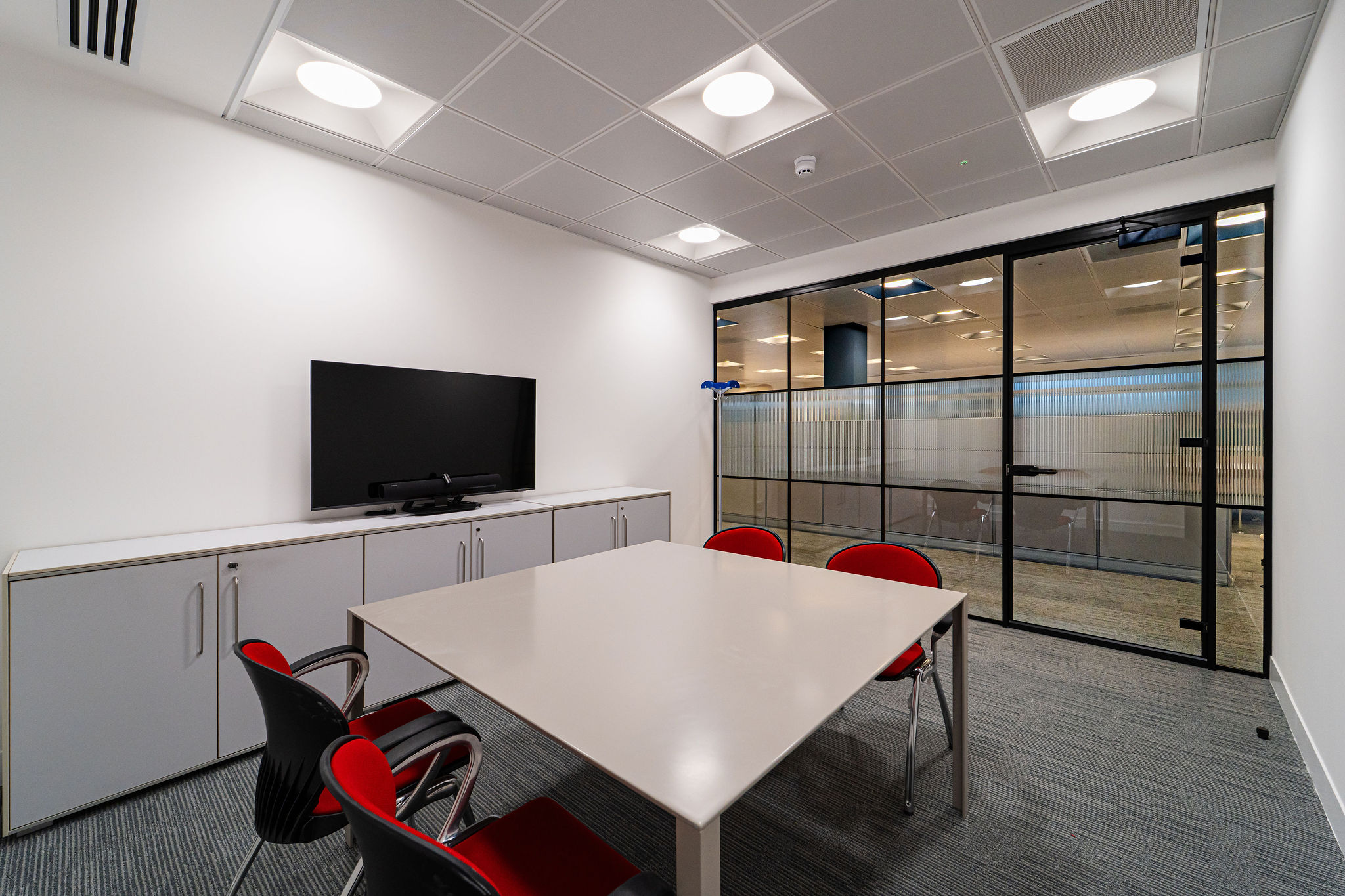
Glazed acoustic partitions allow natural light to travel through the workspace while still providing sound separation. Double glazed systems can deliver impressive acoustic performance when paired with properly sealed door sets.

Solid partitions remain essential in areas where confidentiality is critical, such as HR rooms, focus spaces or communications rooms.

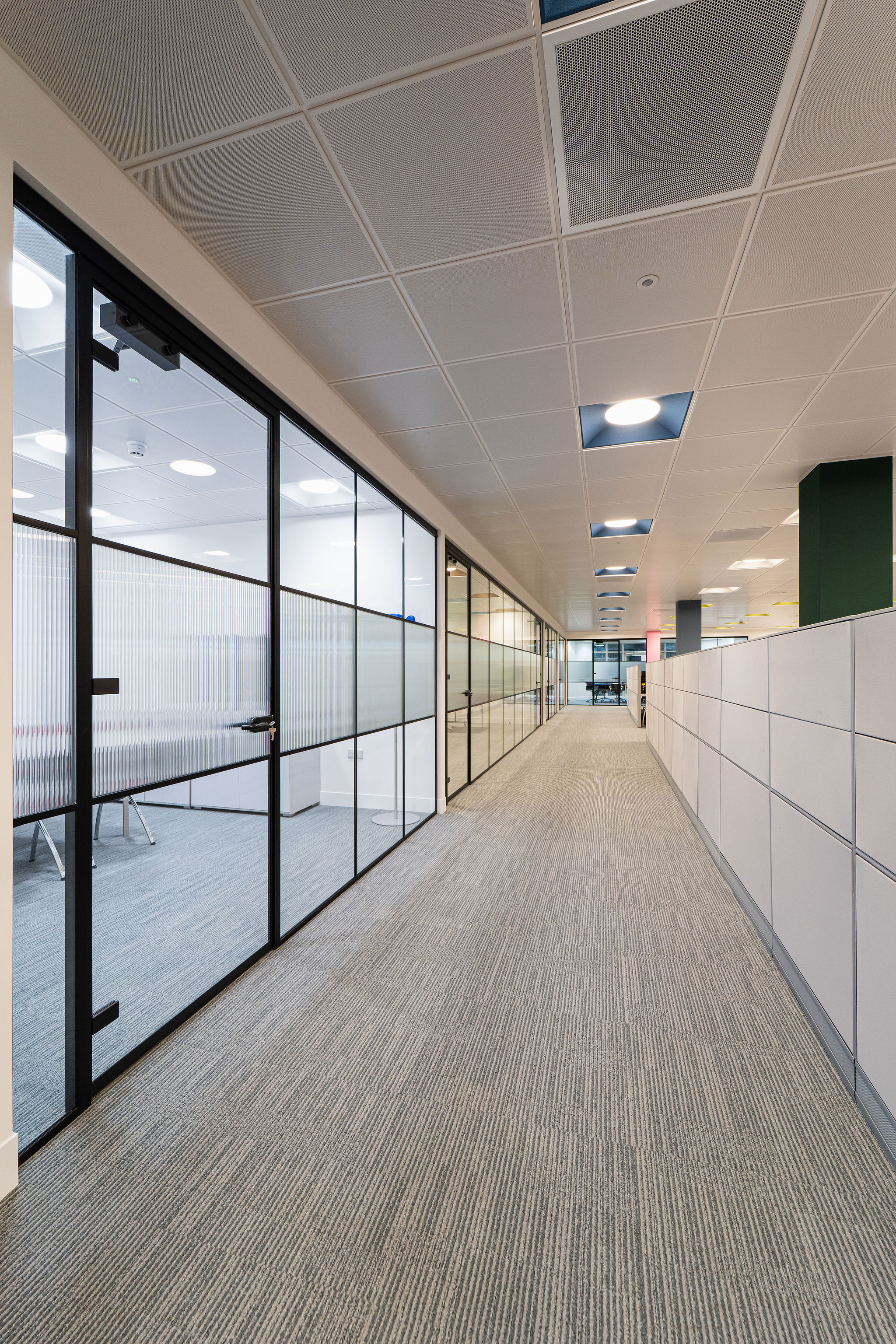
In many projects the most effective solution is a hybrid approach. Glazed meeting rooms with solid returns maintain daylight and visibility while improving acoustic performance. Our office partition and drylining solutions frequently combine these systems to balance performance with workplace design.

If you are exploring partition options, you may also find our guide to Glass Office Partitions vs Stud Walls helpful when comparing different systems.

Integrating acoustic partitions with building services

Acoustic performance depends heavily on coordination with lighting and mechanical services. Air transfer grilles, ductwork and ceiling layouts can all influence how sound travels between rooms.

Poor coordination can unintentionally create sound paths that bypass the partitions entirely. This is why acoustic planning should form part of a wider refurbishment planning process. When partitions, ceilings and services are designed together, the resulting workspace performs far more effectively.

Maintaining acoustic performance over time

Once installed, acoustic partitions require only simple maintenance to preserve performance. Door seals should be inspected periodically to ensure they remain intact and correctly adjusted. Ironmongery should be serviced annually so doors close fully every time.

If layouts change, acoustic detailing should always be reinstated rather than removed. Where offices evolve over time, our office refurbishment specialists can deliver phased improvements or small works programmes that maintain acoustic performance while minimising disruption.

Frequently asked questions about acoustic office partitions

Do glass office partitions reduce noise?

Yes. Double glazed acoustic partitions can significantly reduce sound transmission between rooms when combined with properly sealed doors and ceiling detailing.

Are acoustic partitions soundproof?

Acoustic partitions reduce sound transmission rather than eliminating it completely. Correct specification, door seals and ceiling coordination all influence real world performance.

Can acoustic partitions be added during an office refurbishment?

Yes. Acoustic partitions are commonly introduced during office refurbishment projects to improve meeting room privacy and reduce background noise across the workspace.

Creating quieter, more productive workplaces

Improving acoustics starts with understanding how different spaces are used throughout the working day. By setting appropriate acoustic targets for meeting rooms, collaboration areas and quiet workspaces, partitions and finishes can be specified accordingly.

If you are reviewing the acoustic performance of your workspace, our office partition and drylining team can assess your layout and recommend solutions that balance privacy, flexibility and modern workplace design.


A real example of acoustic partitioning in practice

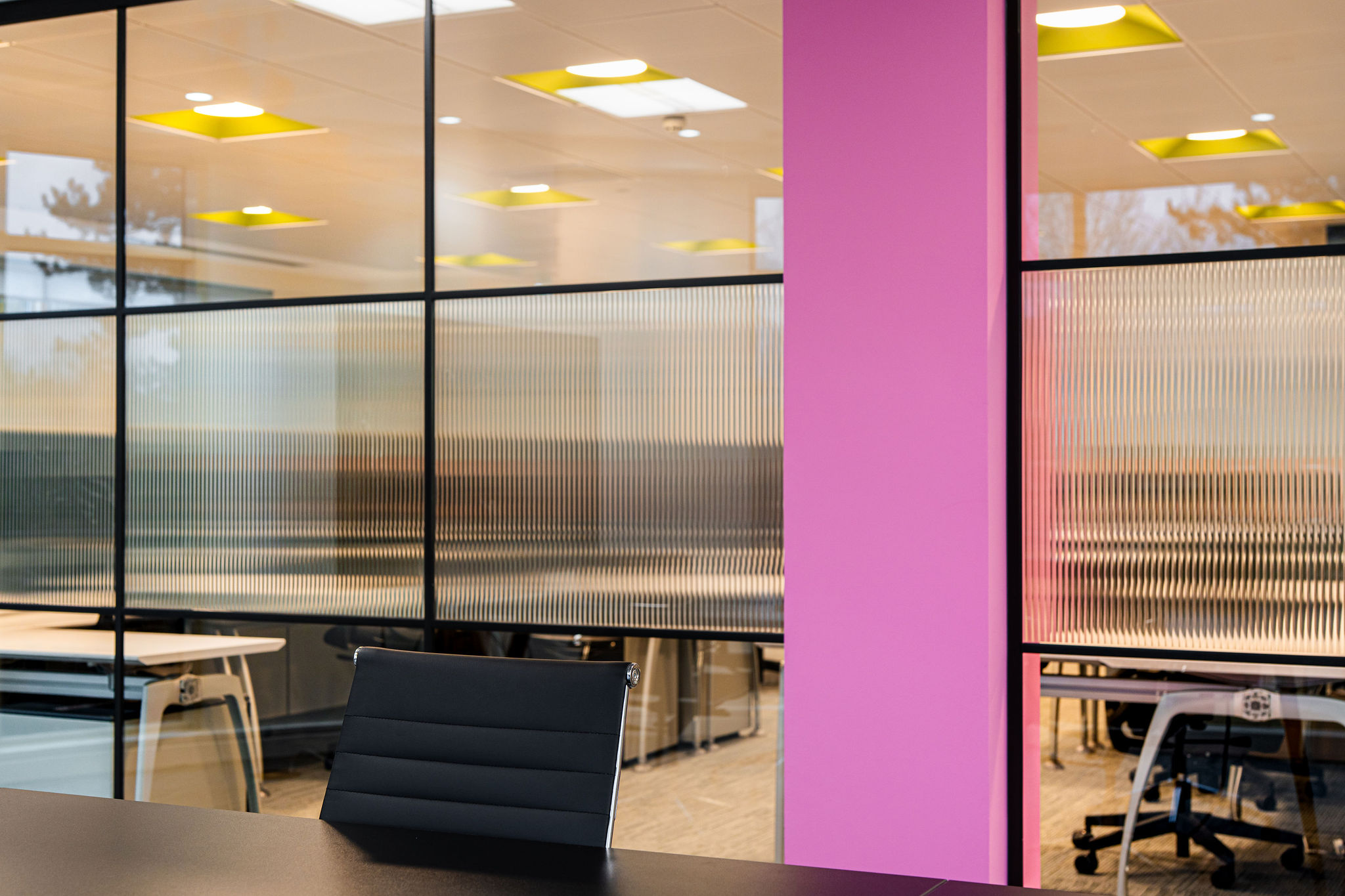
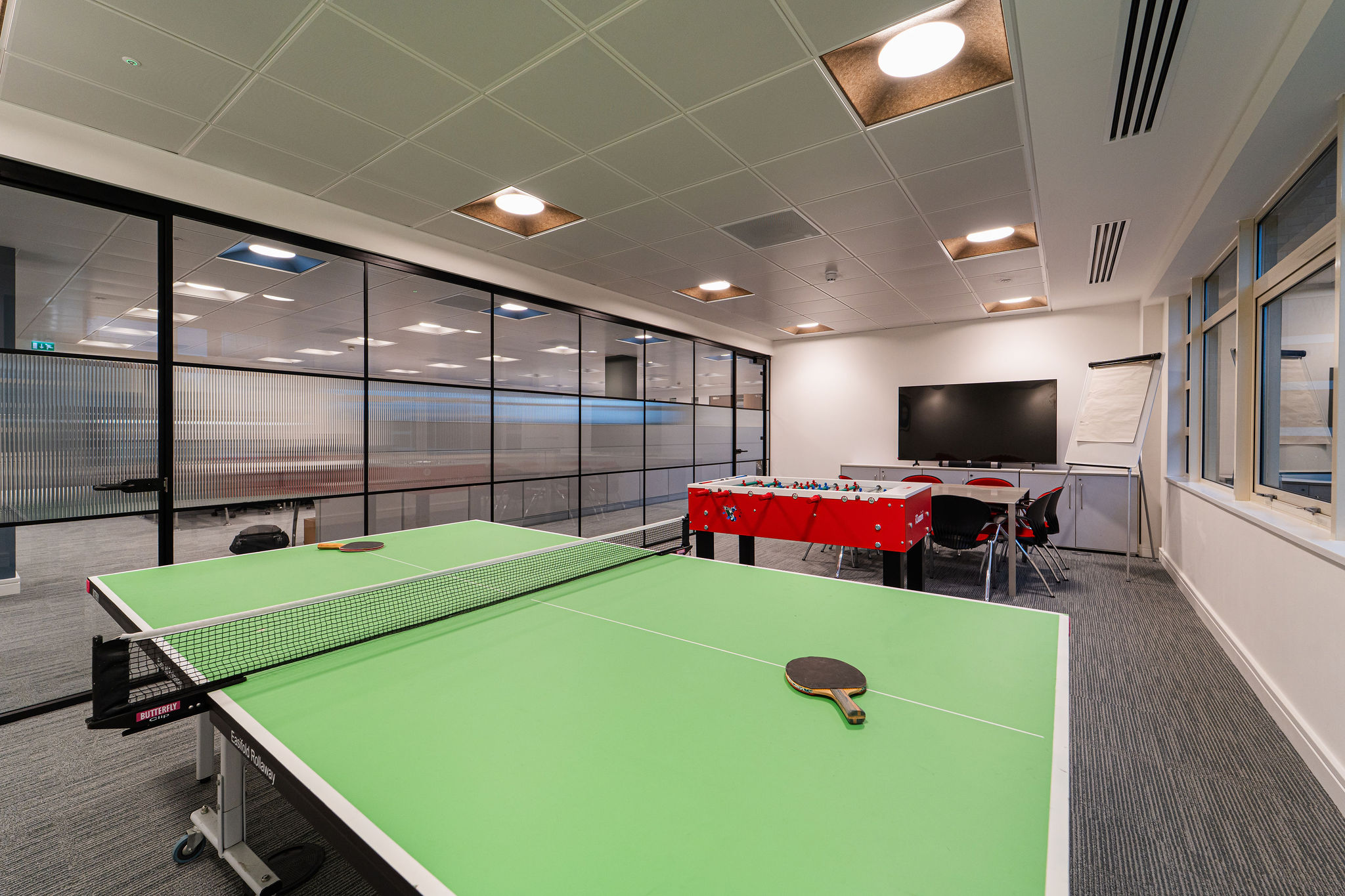
The images featured throughout this article come from our recent iGuzzini office refurbishment project in Guildford. The scheme involved a full workplace reconfiguration, including a new kitchen and dining area, bespoke drywall partitioning with glazed panels to separate the space, and full height glazed partitions and doors to create private offices while maintaining natural light across the floorplate.

You can explore the full iGuzzini project here, or learn more about our refurbishment work across Surrey office refurbishment projects.

Reach out today for a free initial consultation

About the author

ReSpace