
Skip to main content Skip to footer

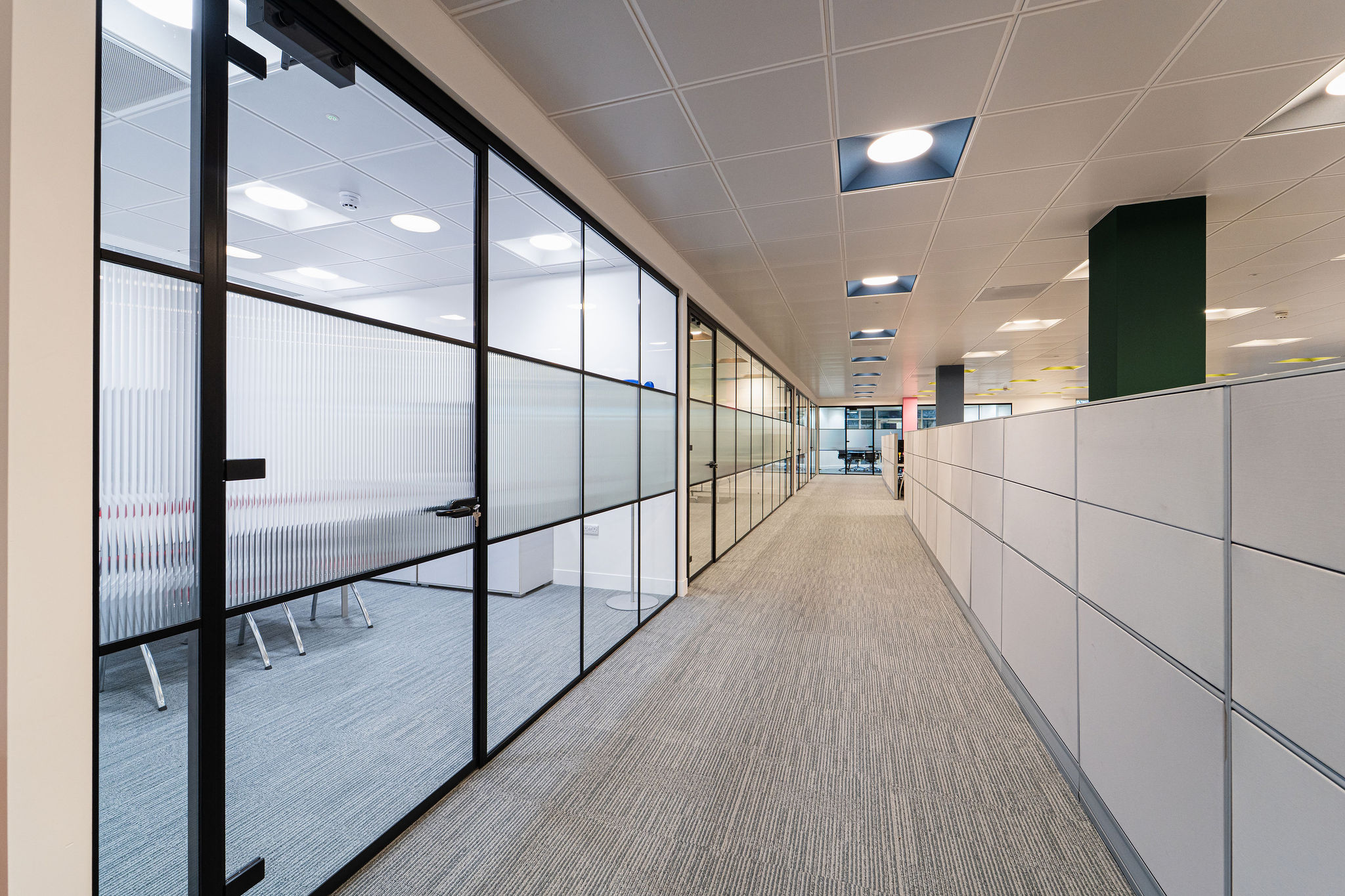
The biggest advantage of glass partitions is how they transform the feel of a space.

Glass Office Partitions: Benefits, Uses and Design Ideas

Many workplaces reach a point where the layout no longer works. Teams grow, meeting rooms are added over time and what started as an open plan space can quickly become fragmented and closed in.

Glass office partitions provide a way to redefine that space without losing the openness that modern offices rely on. Instead of blocking light and visibility, they allow you to create meeting rooms, private offices and breakout areas that still feel connected to the wider workspace.

Delivered as part of a wider office partition and drylining solution, glass systems are now one of the most widely used features in office refurbishment projects. They strike a balance between structure and openness, giving businesses more control over how their space is used.

Why glass office partitions are so widely used

The biggest advantage of glass partitions is how they transform the feel of a space. Natural light can move freely through the office, making even smaller floorplates feel larger and more comfortable to work in.

One of the biggest shifts we see during refurbishment projects is how glass partitions change the perception of space. Areas that previously felt enclosed or disconnected become lighter, more open and easier to use. This is particularly noticeable in older offices where solid walls have been introduced over time and natural light is limited.

They also create a more modern and professional environment. Meeting rooms feel more open, private offices remain connected to the wider team and the overall workspace becomes easier to navigate and use.

From a practical perspective, glass partitions allow businesses to introduce structure without committing to fully solid construction. This makes them particularly useful in workplaces that need to adapt over time.

If you are comparing different partition types, our guide to Glass Office Partitions vs Stud Walls explains how they differ in performance, cost and flexibility.

Where glass partitions work best in an office

Glass partitions are versatile and can be used across a wide range of spaces. In most projects, they are not used everywhere but instead introduced strategically to improve how specific areas function.

Meeting rooms are one of the most common applications. Using glass allows these rooms to feel open and accessible while still providing separation from the main office. When paired with the right detailing, they can also support good acoustic performance.

They are also widely used to define breakout and kitchen areas. In our GIC London project, glass partitions were used to create a clearly defined kitchen and breakout space while maintaining light and visibility. This helped contain noise without making the space feel closed off.

Private offices benefit in a similar way. In the iGuzzini Guildford refurbishment, we introduced glazed offices and breakout areas that allowed natural light to flow through to the core of the workspace. This created a more balanced environment without sacrificing privacy where it was needed.

Even in smaller interventions, glass partitions can make a noticeable difference. Our Eddisons Canary Wharf project used glazed elements within a kitchen and breakout area to improve layout clarity and overall usability.

Types of glass office partitions

Glass partitions are not a single system. There are several variations available depending on the level of performance and finish required.

Single glazed systems are often used where visual connection and light are the priority. Double glazed partitions offer improved acoustic performance and are typically used for meeting rooms and private offices.

Framed systems provide a more defined structure, while frameless glass partitions create a cleaner, more minimal look. The right choice depends on the overall design of the workspace and how the space needs to function day to day.

Because many glass partition systems are demountable, they also allow layouts to evolve over time without major disruption. This makes them particularly well suited to growing businesses or organisations that expect their space to change.

Design considerations when using glass partitions

While glass partitions offer clear benefits, their performance depends on how they are designed and integrated into the wider space.

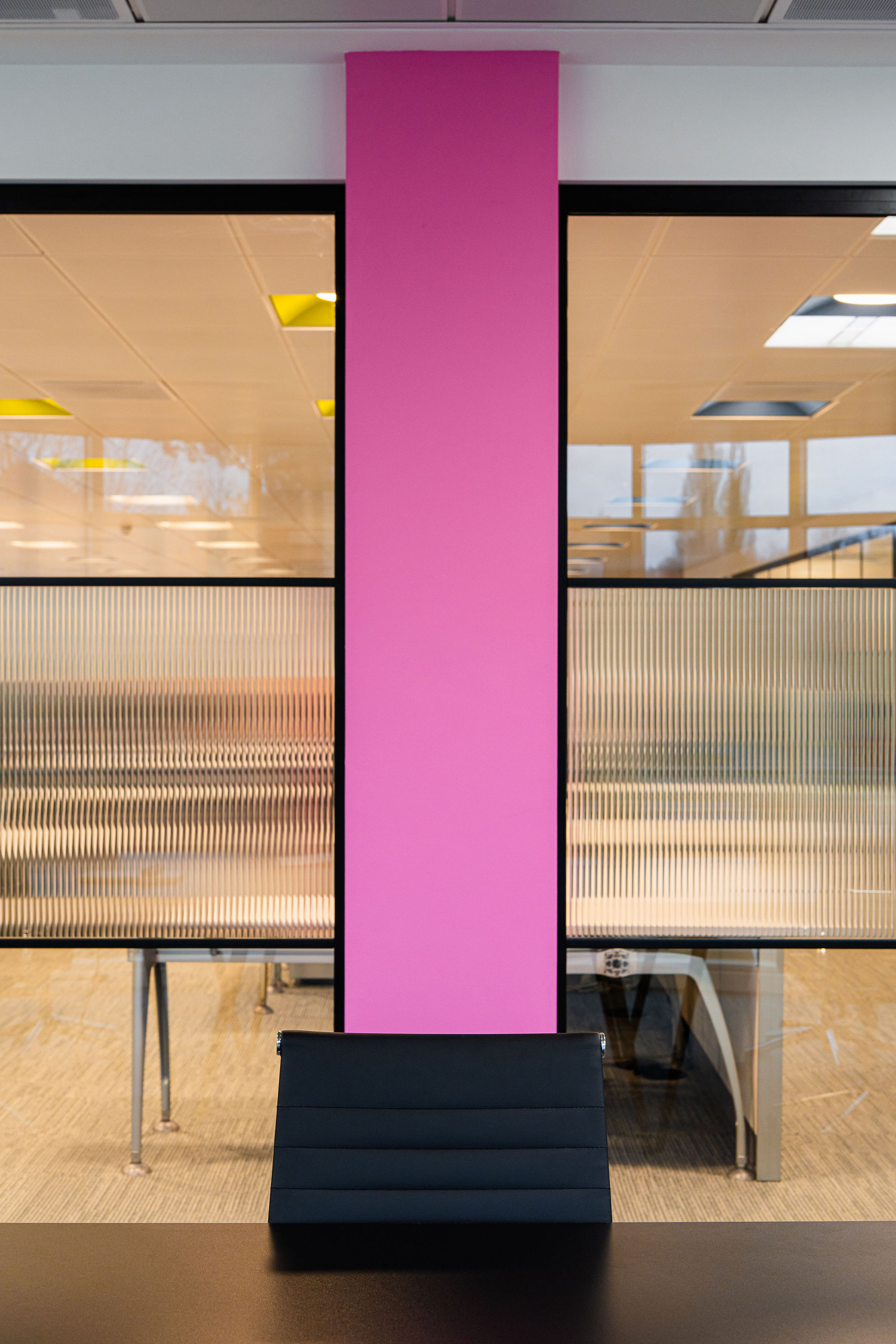
Privacy is often the first consideration. This can be managed through manifestation, partial frosting or full height films, allowing businesses to strike the right balance between openness and discretion.

Acoustic performance is another key factor. While glass can provide effective sound separation, it needs to be combined with the right door sets, seals and ceiling detailing to work properly. Our guide to acoustic office partitions explains how to achieve this in more detail.

Layout and positioning also play an important role. Glass partitions work best when they are aligned with how the office is actually used, rather than simply dividing space visually. This is why they are typically considered early in the office design process, alongside lighting, services and circulation.

How glass partitions support office refurbishment projects

Glass partitions are most effective when delivered as part of a wider office refurbishment. Rather than being treated as a standalone feature, they should be integrated with ceilings, lighting, power and ventilation to create a cohesive workspace.

This joined up approach ensures the space not only looks good, but also performs well day to day. It also allows businesses to future proof their layout, making it easier to adapt the space as requirements change.

Frequently asked questions about glass office partitions

Do glass office partitions reduce noise?

Yes, particularly when using double glazed systems with properly sealed doors. They can significantly reduce sound transfer between rooms when specified correctly.

Are glass partitions suitable for private offices?

Yes. Glass partitions are commonly used for private offices, often combined with manifestation or partial frosting to provide additional privacy.

Can glass partitions be installed in an existing office?

Yes. Glass partitions are regularly introduced during refurbishment projects and can be integrated into existing layouts with minimal disruption when properly planned.

Transforming your workspace with glass partitions

Glass office partitions offer a practical way to improve how a workspace looks and functions. By introducing light, structure and flexibility, they help create environments that support both collaboration and focused work.

If you are considering changes to your layout, our office partition and drylining team can help you explore options that align with your space, your team and your long term plans.

Reach out today for a free initial consultation

About the author

ReSpace