
Skip to main content Skip to footer

Choosing the right partition system for your office refurbishment

Glass Office Partitions vs Stud Walls: which is right for your workspace?

Glass office partitions vs stud walls: compare cost, acoustics, fire rating and long term flexibility to determine the right partition system for your commercial office. This guide explains how each option performs within a wider refurbishment project, helping you make informed, strategic decisions about layout, privacy, compliance and future adaptability.

When comparing glass office partitions vs stud walls, the decision is rarely just about appearance. The choice affects acoustics, light flow, compliance, flexibility and long term cost. For many businesses across Kent, Sussex, Surrey and London, partitioning forms part of a wider refurbishment programme rather than a standalone installation. Selecting the right system means understanding how it interacts with your layout, services and long term business objectives.

Start with the wider context

Partitioning should not be treated as an isolated decision. It influences lighting layouts, air conditioning distribution, fire strategy and circulation space. If introduced late in the process, compromises are almost inevitable.

That is why partition strategy is typically developed during the office design phase. Early coordination ensures acoustic performance, compliance and aesthetics work together rather than against each other. When integrated properly, partition installation becomes one coordinated element within a wider refurbishment programme delivered through our office partition and drylining service.

If you are at the early stages of scoping works, our article on planning an office refurbishment outlines the key considerations before committing to layout changes.

Where glass office partitions perform best

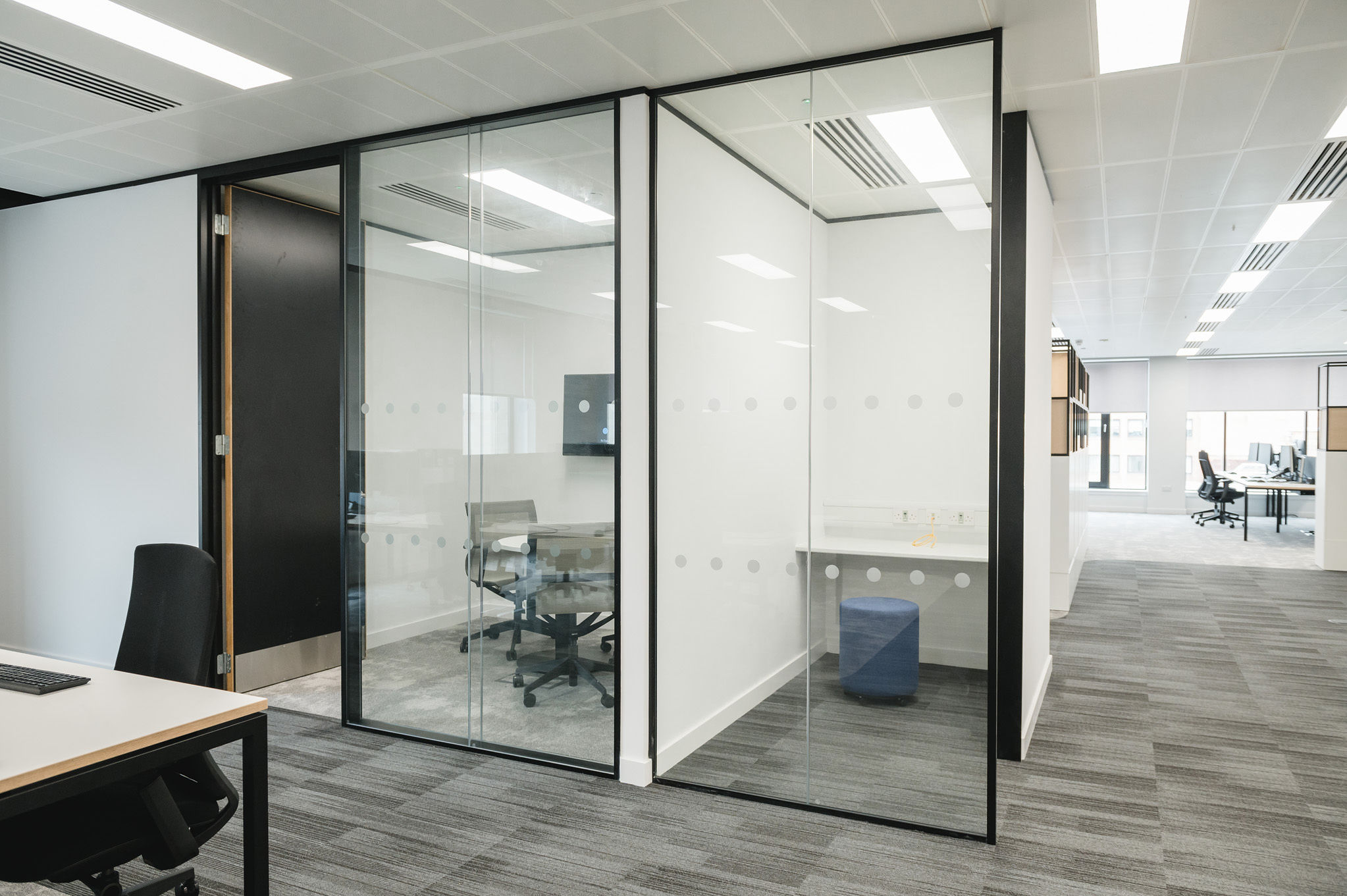
Glass partitions are most effective where light and visual connectivity are priorities. In buildings with limited natural light, full height glazing allows both daylight and artificial lighting to travel through the workspace, significantly improving how a space feels.

They are commonly used for meeting rooms, boardrooms and private offices where separation is required but openness remains important. Modern glazed systems can achieve strong acoustic and fire performance when correctly specified. Laminated acoustic glass, properly sealed door sets and full height installation to the structural slab all improve privacy compared with basic systems.

Across several recent refurbishment projects in the South East, clients have used glazed partitions to modernise their workplace while maintaining defined zones as part of structured programmes delivered during our office refurbishment services. For example, our GIC glazed partition case study demonstrates how light flow and smart use of glass partitions can define spaces within what would normally be considered a single, open-plan room.

Understanding the difference between CAT A and CAT B fit out is essential before deciding how partitions will be configured too. Read our guide to Cat A vs Cat B fit out for more detail.

Where stud walls remain the stronger solution

Stud partitions continue to offer a practical and cost effective solution, particularly where higher levels of acoustic privacy are required. In finance, legal or HR environments where confidential discussions are frequent, insulated stud walls can provide greater reassurance.

They also allow services, cabling and insulation to be concealed within the wall cavity, which can simplify integration with traditional suspended ceiling systems. While material costs are often lower than glazed systems, overall project cost depends on specification, finishing and coordination within the wider refurbishment.

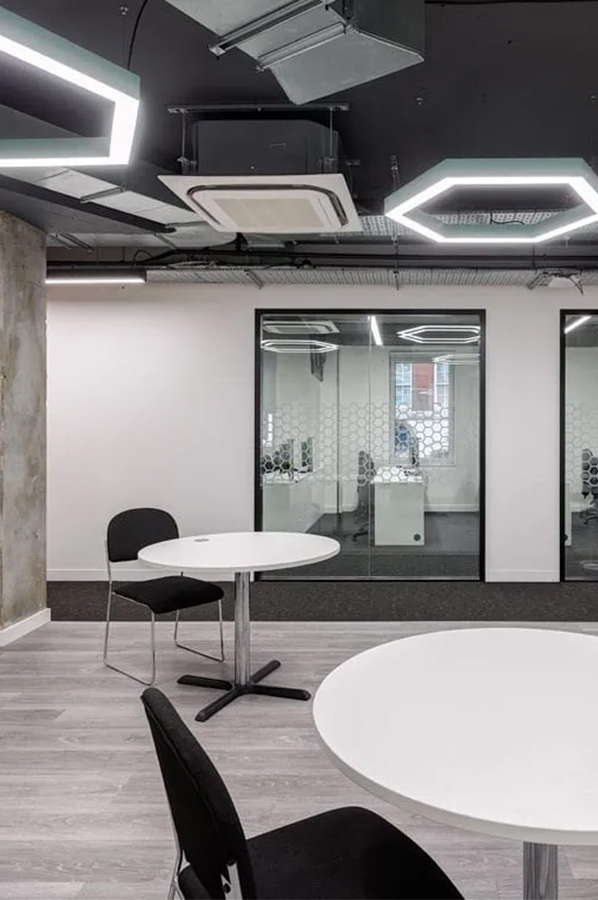
In many commercial offices, the most effective approach is a hybrid solution delivered through expert design and integration, combining glazing in collaborative areas with solid construction where discretion is essential.

A great example would be our Eddisons Case Study - where we utilised acoustic glass and stud partitions throughout the office fit out, dramatically improving privacy within a busy workspace.

Acoustics and compliance depend on specification

The assumption that glass equals poor acoustics and stud equals silence is outdated. Performance depends on detailing. Glass thickness, lamination, door seals and ceiling junctions all influence sound transmission. Likewise, a poorly detailed stud wall can underperform if insulation and sealing are inadequate.

Effective partition placement relies on proper space planning. Our guide on why office space planning is important explains how layout decisions impact productivity and flexibility.

Fire rating requirements also shape decision making, particularly in multi tenant buildings across London and larger business parks in Surrey and Kent. Certified fire rated glazed systems are widely available, but they must be installed correctly and coordinated with the building’s fire strategy.

This is why partitioning is best considered within a coordinated programme delivered by an experienced office refurbishment company rather than treated as a late-stage addition. Though this isn't to say it's not possible to add retrospectively.

Cost and long-term flexibility

When comparing glass office partitions vs stud walls, cost is often the first concern. However, partition height, fire rating, acoustic performance and door specification typically influence pricing more than material choice alone. Programme sequencing and integration with mechanical and electrical works also affect overall efficiency.

Growing businesses across Sussex and Surrey often value demountable glazed systems for their adaptability. If future reconfiguration is likely, flexibility can outweigh marginal upfront savings. Conversely, organisations with stable headcounts and clearly defined spatial needs may prioritise solid, permanent construction.

Frequently asked questions about glass office partitions and stud walls

Are glass office partitions soundproof?

Glass office partitions are not inherently soundproof, but they can achieve strong acoustic performance when correctly specified. Laminated acoustic glass, full height installation and well sealed doors significantly improve privacy. In highly confidential environments, enhanced acoustic glazing or a hybrid approach combining glass and insulated stud walls may be more appropriate.

Are stud walls cheaper than glass partitions?

Stud walls often have lower base material costs, but total project cost depends on specification, finishing and integration within the wider refurbishment. Glass systems may carry higher upfront costs, yet can enhance light distribution and perceived space value when delivered as part of a coordinated programme.

Can glass partitions be fire rated?

Yes. Many modern glazed partition systems are available with certified fire ratings suitable for commercial environments. These must be specified and installed correctly, particularly in buildings with landlord compliance requirements across London and the South East.

Which option offers more flexibility?

Demountable glazed systems often provide greater long term flexibility, allowing reconfiguration with reduced disruption. Traditional stud construction is generally more permanent once installed. The most suitable solution depends on anticipated growth, lease length and operational stability.


Making the right decision for your workspace

There is no universal answer to whether glass office partitions or stud walls are better. The most effective solution comes from understanding your building constraints, acoustic needs, budget parameters and long term business plans.

If you are reviewing your layout, our office partition and drylining team can assess your plans and recommend a strategy that balances privacy, light and adaptability. If partitioning forms part of a broader workspace upgrade, speak with our specialists about your office refurbishment to ensure everything is coordinated from day one.

Reach out today for a free initial consultation

About the author

ReSpace